Pay in installments of $5.76 with
 ,
,
 and
and

Shipping Estimate
USA
- USA
- CAN
- USA
- CAN
Ships within 48 hours · Estimated delivery Jul 2 - Jul 7
 Promo Codes Available:
For Your Every Summer RSVP, with Code: SUMMER15
Description
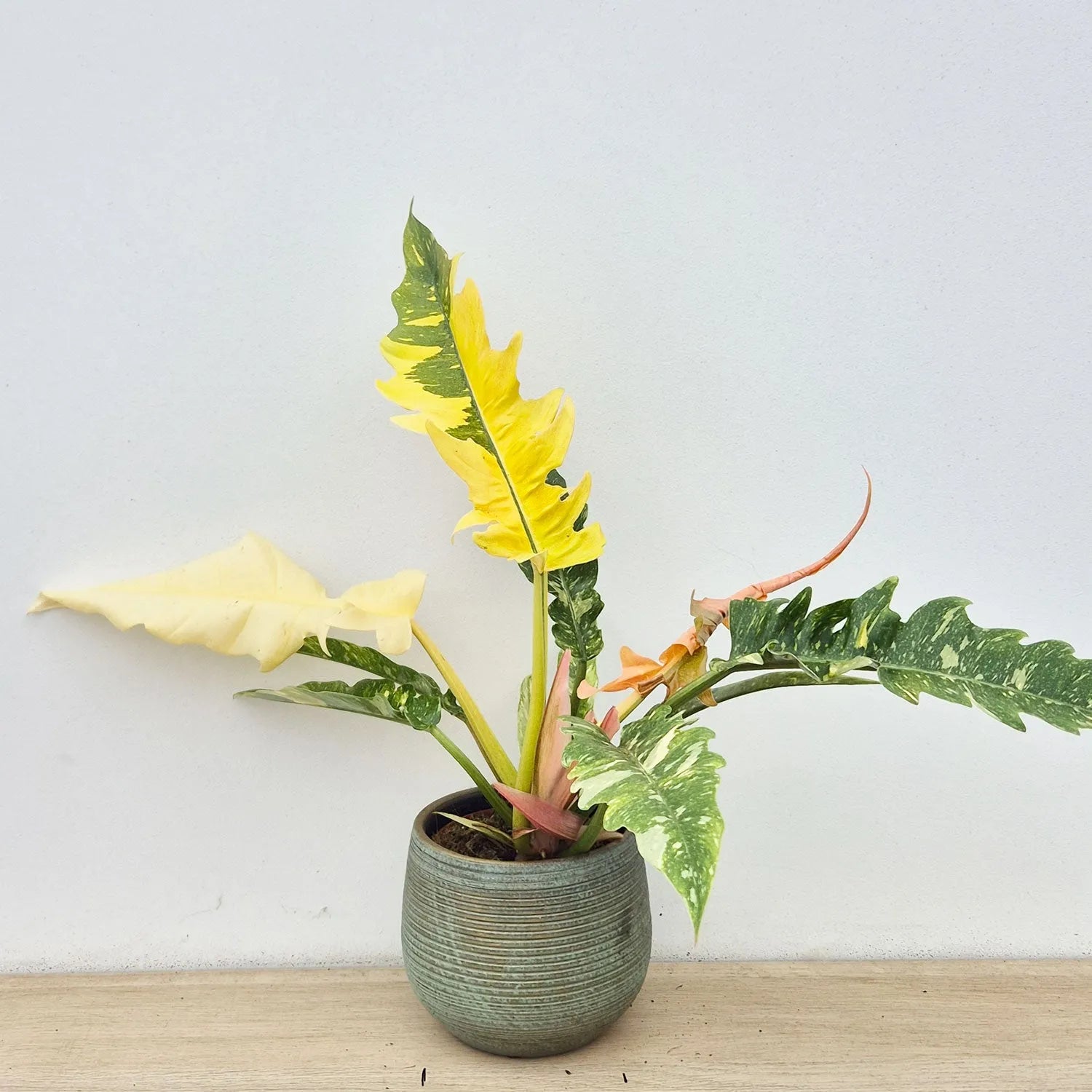
variegated ring of fire philodendron Extra Variegated Philodendron Ring of Fire Plant (Choose Your Own Plan – Plants For All SeasonsPhilodendron Ring of Fire is one of the most spectacular and sought after philodendron cultivars, prized for its bold, serrated foliage and striking variegation. A hybrid believed to have originated from a cross involving Philodendron wendlandii and Philodendron tortum, this plant belongs to the Araceae family and has become a true collectors favourite. Its leaves are long, narrow, and deeply serrated along the edges, giving them a jagged, almost
Philodendron ‘Ring of Fire’ is one of the most spectacular and sought-after philodendron cultivars, prized for its bold, serrated foliage and striking variegation. A hybrid believed to have originated from a cross involving Philodendron wendlandii and Philodendron tortum, this plant belongs to the Araceae family and has become a true collector’s favourite.
Its leaves are long, narrow, and deeply serrated along the edges, giving them a jagged, almost flame-like appearance. Each leaf can display an extraordinary mix of colours – from deep green and lime to orange, red, cream, and yellow – with the variegation forming streaks, patches, and marbling. No two leaves are alike, making the plant’s overall appearance dynamic and ever-changing.
A relatively slow grower, Philodendron ‘Ring of Fire’ can eventually reach over 1.2–1.5 metres tall as a self-heading plant (not a climber). Its upright, architectural form and fiery leaf palette make it an unforgettable statement piece in any indoor collection.
Philodendron ‘Ring of Fire’ – Care Guide
Light
Requires bright, indirect light to maintain strong variegation. Tolerates medium light, but colours will be less intense and new growth may revert to greener tones. Avoid harsh direct sun, which can scorch the delicate variegated areas.
Watering
Water when the top 3–4 cm of soil feels dry. Keep soil lightly moist during spring and summer but avoid waterlogging, which can cause root rot. Reduce watering in winter when growth slows.
Temperature and Humidity
-
Temperature: Thrives in 18–28°C. Protect from draughts and avoid prolonged exposure below 15°C.
-
Humidity: High humidity (60–80%) is preferred. Mist regularly, group with other plants, or use a humidifier to prevent brown leaf tips and encourage lush growth.
Soil and Potting
Use a chunky, free-draining aroid mix – peat-free compost blended with orchid bark, perlite, and coco coir. Repot every 1–2 years in spring to refresh the soil and support healthy root development.
Feeding
Feed every 2–3 weeks in spring and summer with a balanced liquid fertiliser, diluted to half strength. Reduce feeding in autumn and stop in winter.
Pruning and Maintenance
Remove old or yellowing leaves at the base to maintain appearance. Being a slow grower, it doesn’t require heavy pruning, but trimming damaged foliage keeps it tidy.
Growth and Maturity
A slow to moderate grower. Over time,